

Custom Millwork & Custom Cabinetry in Houston
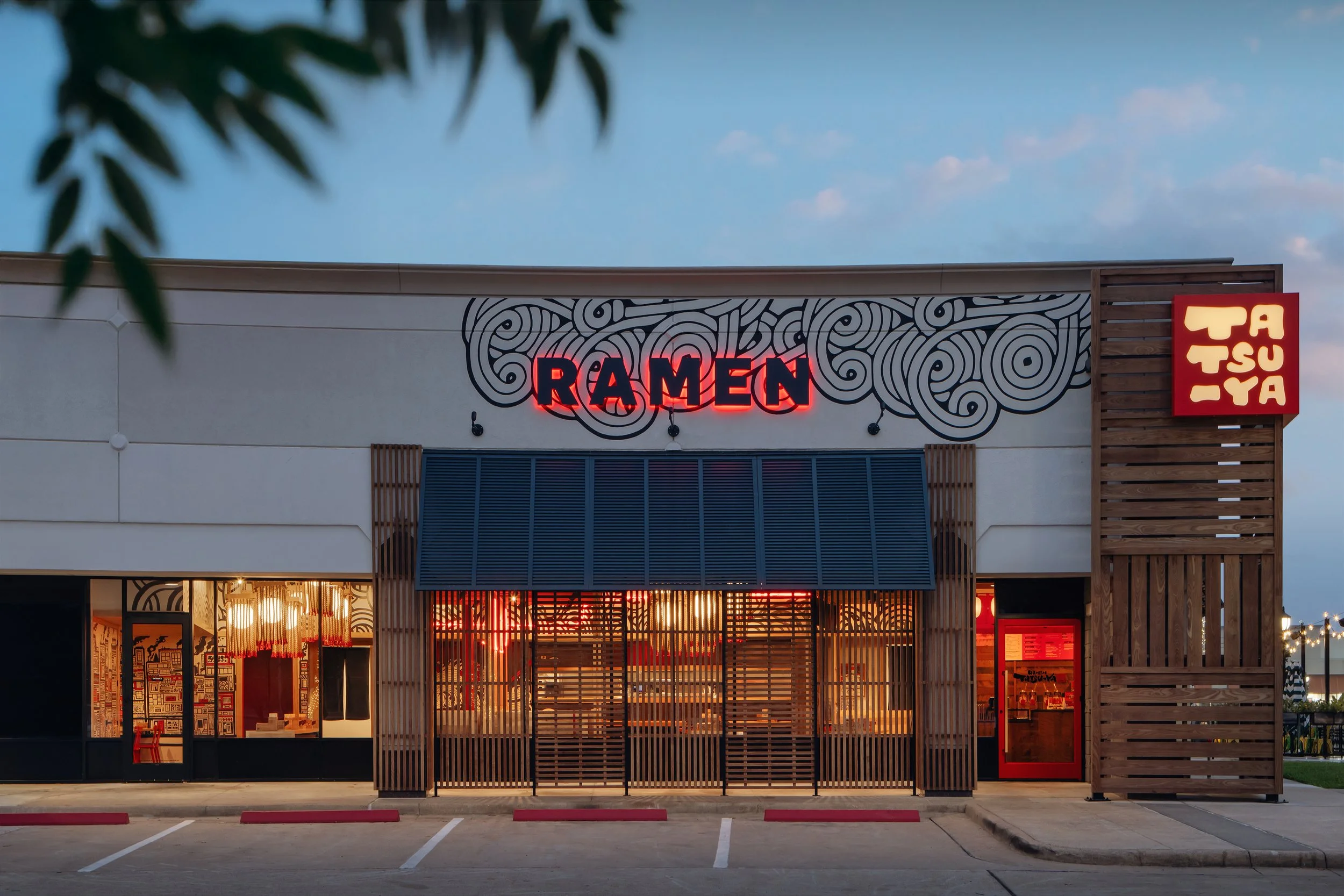
Helping to Bring Ramen-Tatsu-Ya to Houston
We were so lucky to have been a part of bringing the iconic Austin-based Ramen Tatsu-Ya to Houston! This hospitality build was shaped by early collaboration. From pre-construction through final installation, the goal was to translate a strong brand identity into a space that feels immersive, crafted, and unmistakably Tatsu-Ya.
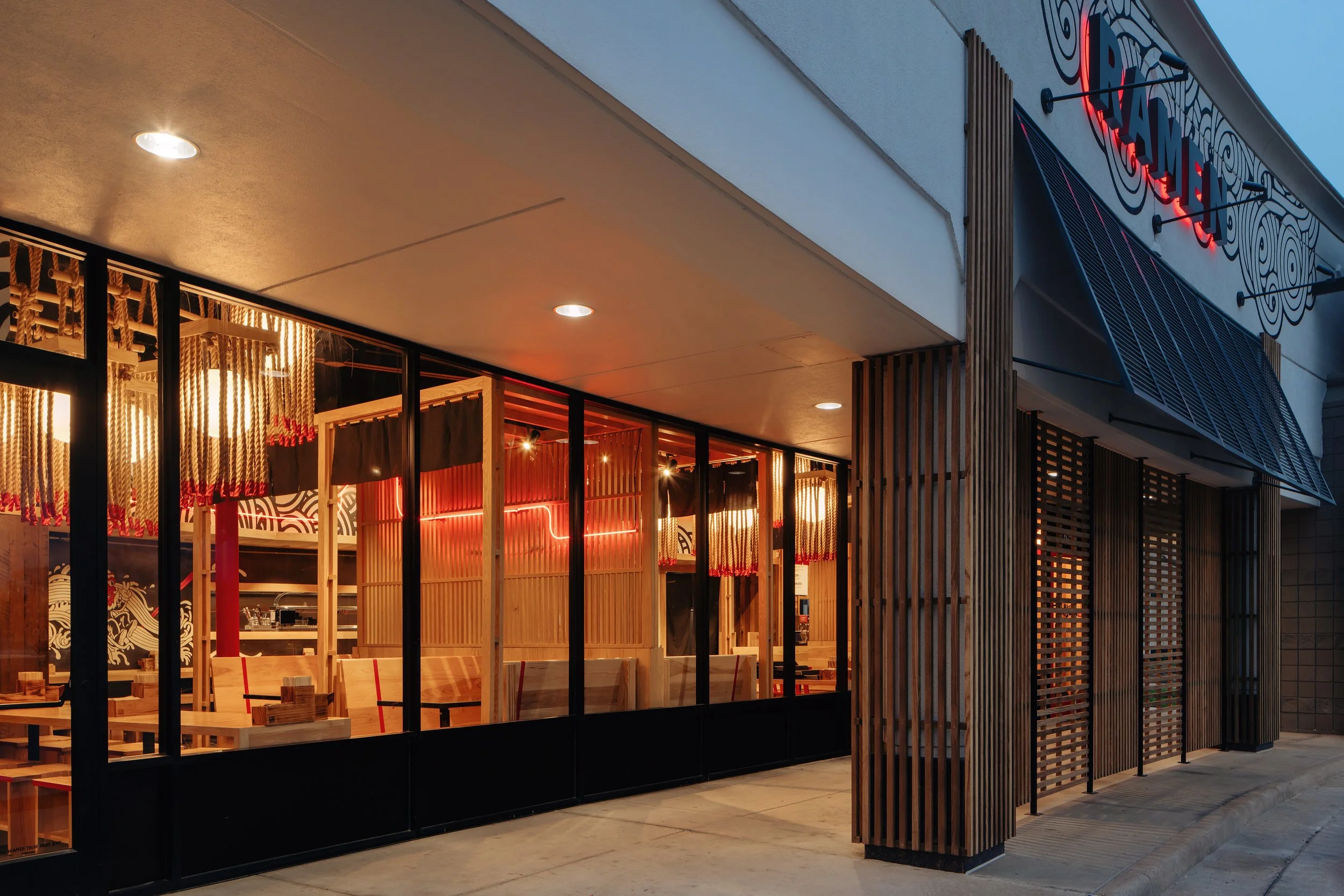
Coterie fabricated and installed the complete interior and exterior custom millwork package, along with the custom FF&E — including booths, banquettes, stools, tables, and specialty lighting — working in close collaboration with, Tatsu-Ya, Michael Hsu Office of Architecture and Citadel Development Group.
This project demonstrates how custom millwork and custom cabinetry in Houston succeed when the fabrication partner is engaged early and known as part of the design process.
Collaborative Fabrication for Hospitality Interiors
We brought prior experience fabricating Ramen Tatsu-Ya in Round Rock. That existing relationship with the folks at Tatsu-Ya gave us a strong working knowledge of the brand’s material language, construction expectations, and operational needs.
Citadel Development Group created a smart and egoless pre-construction workflow that connected us directly with the architects and client. That access allowed real-time collaboration on detailing, tolerances, and material transitions — the technical decisions that ultimately shape how a hospitality space performs.
For restaurants and hospitality interiors, custom cabinetry in Houston works best when fabrication is part of the design conversation from day one.
Material Strategy & Brand Expression
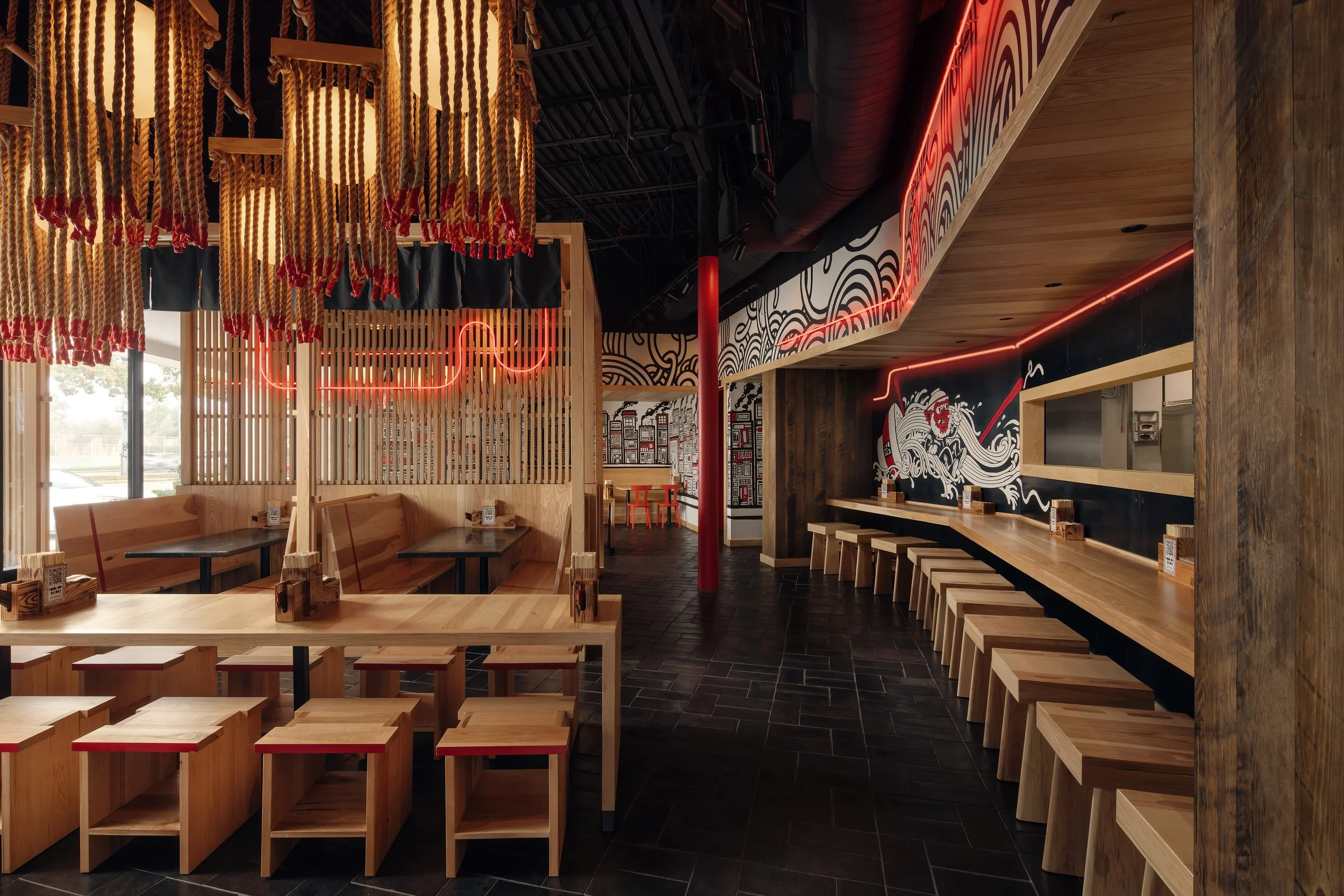
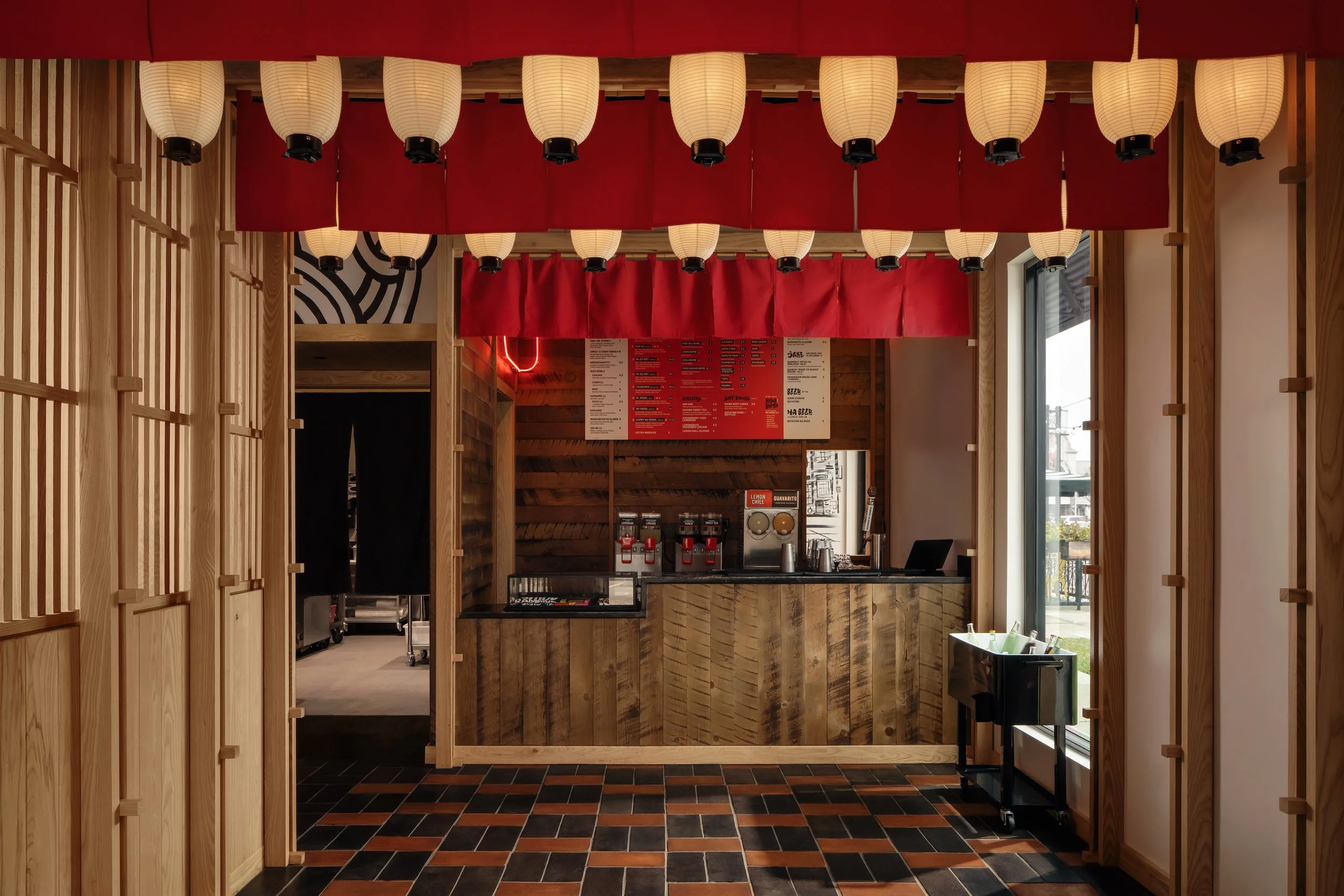
The interior palette centered on pecan and ash in both solid wood and veneer, accented by Tatsu-Ya’s signature red stripe. Intricate slatted screens, zinc bar and tabletop surfaces, and integrated framing establish a consistent brand language throughout the restaurant.
Smaller details — including custom merchandise displays and specialty lighting like the jellyfish fixtures — were fabricated with the same care as the primary architectural millwork. Every component supports the identity of the space.
Hospitality millwork must balance aesthetics with durability. All seating, casework, and custom cabinetry were engineered for heavy commercial use while preserving the warmth and tactile quality of solid wood construction.
Custom Cabinetry Built for Houston Hospitality Use
Restaurants place extreme demands on millwork. Constant use, aggressive cleaning, and tight service circulation mean cabinetry and furnishings must be structurally robust without appearing heavy.
The booths, seating structures, and integrated cabinetry were developed in partnership with the architectural team to withstand long-term hospitality wear while maintaining visual lightness. Joinery remains expressive and intentional — a subtle signal of craftsmanship that guests experience without consciously analyzing.
This is where collaborative custom millwork in Houston becomes more than fabrication. It becomes part of the architectural atmosphere.
A Boutique Fabrication Partner for Houston Designers
Coterie operates as a boutique millwork firm focused on hospitality and commercial interiors. Our role extends beyond fabrication— we work alongside designers, architects, hospitality groups and contractors to refine how concepts translate into physical environments.
The first Houston Ramen Tatsu-Ya project shows what happens when architect, client, GC, and millwork fabricator operate as a unified team. The final space feels cohesive because collaboration and trust were embedded into the process from the start.
Custom millwork and custom cabinetry in Houston are most successful when fabrication is treated as a design partnership. The Ramen Tatsu-Ya project demonstrates how early collaboration, material discipline, and precision execution translate brand identity into built space.
When the process is aligned, craftsmanship naturally becomes the environment, and the environment becomes the experience.
